خصم الصيف 25% على جميع منتجات ديكور المنزل

Mona Lisa, the most famous painting in the world

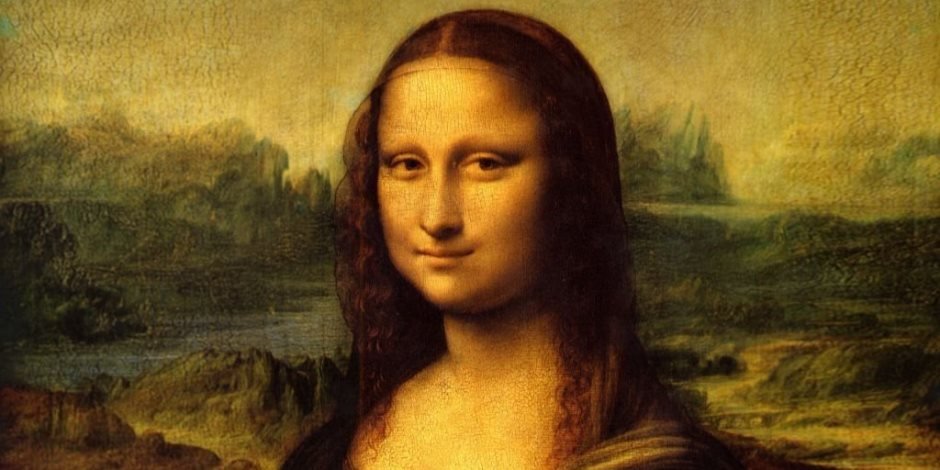
The Mona Lisa is an oil painting on a poplar wood panel, created by the renowned Italian artist Leonardo da Vinci between 1503 and 1519 while he was living in Florence. It is considered the most famous and most valuable painting in the world. Owned by the French government, it is displayed at the Louvre Museum in Paris, attracting over 9 million visitors each year.
The History and Specifications of the Painting
Historical sources confirm that Leonardo da Vinci was commissioned to paint the Mona Lisa in Florence, beginning the work in 1503 and completing it in France in 1519. The painting was first owned by King Francis I of France, then passed to King Louis XIV, and later became the property of the French Republic after the Revolution, becoming a national heritage item owned by the state.
Da Vinci painted the Mona Lisa on a poplar wood panel measuring 77 cm in height and 53 cm in width, using oil paints. The painting depicts a modestly beautiful woman, wearing dark clothing with no jewelry, and captivates viewers with her mysterious smile and gaze.
Its value is considered priceless, and under French heritage law, it cannot be bought or sold.
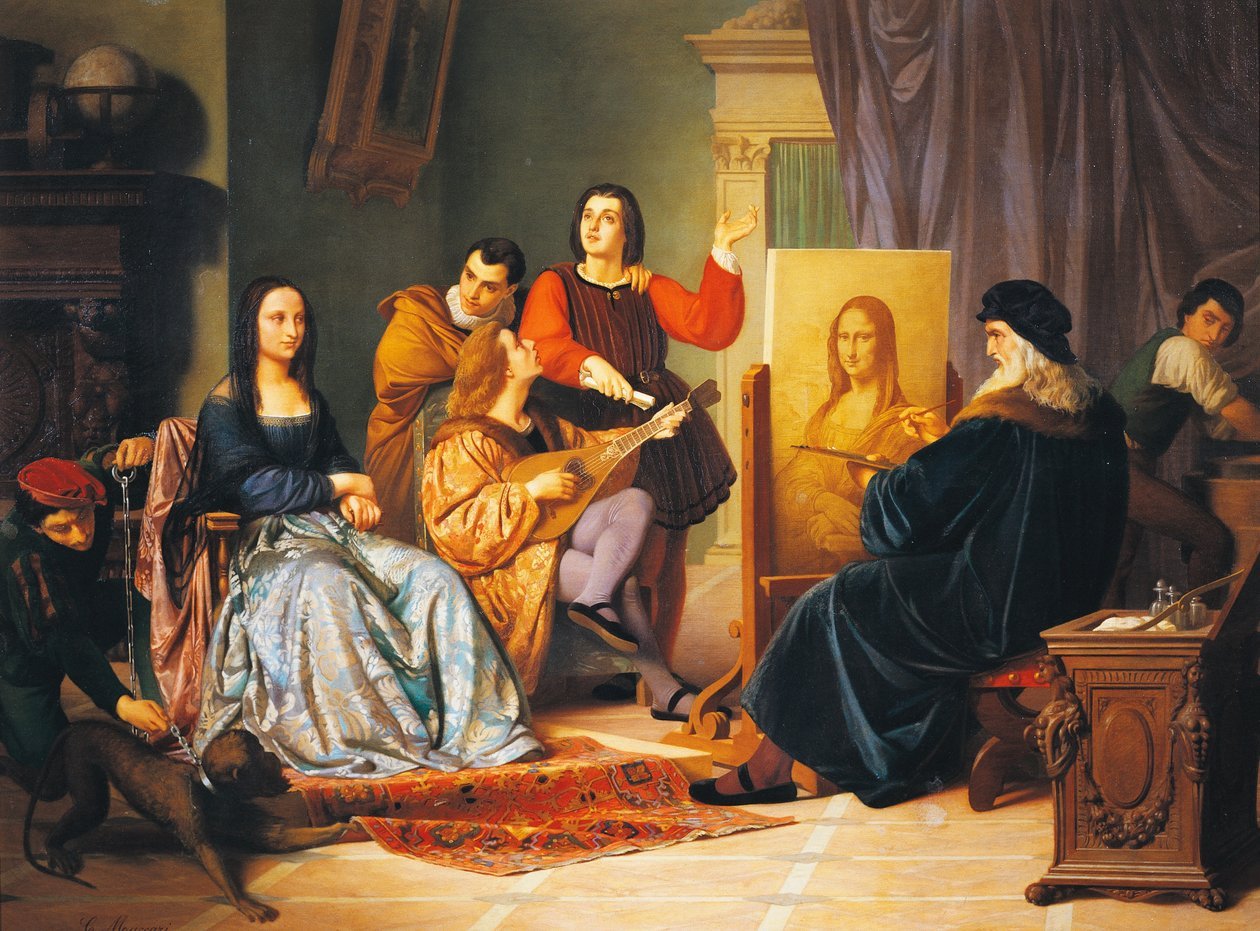
Who is the woman depicted in the Mona Lisa painting?
There has been much speculation and debate about the identity of the woman in the Mona Lisa painting, and scholars and historians have proposed several interpretations, including:
-
The hypothesis of biographer Giorgio Vasari in 1550, who believed the portrait depicts Lisa del Giocondo, the wife of the Florentine merchant Francesco di Bartolomeo del Giocondo—which is where the alternative title La Gioconda comes from.
-
The theory of Sigmund Freud, the Austrian neurologist and founder of psychoanalysis, who believed the model could be Caterina, Leonardo da Vinci’s mother. He suggested that Mona Lisa’s mysterious smile was inspired by Leonardo’s memory of his mother’s smile.
-
A third suggestion by a group of scientists proposes that the painting is actually a self-portrait of Leonardo da Vinci, citing the resemblance between the woman’s features and those of the artist, and interpreting his portrayal as a woman as an intentional artistic mystery.
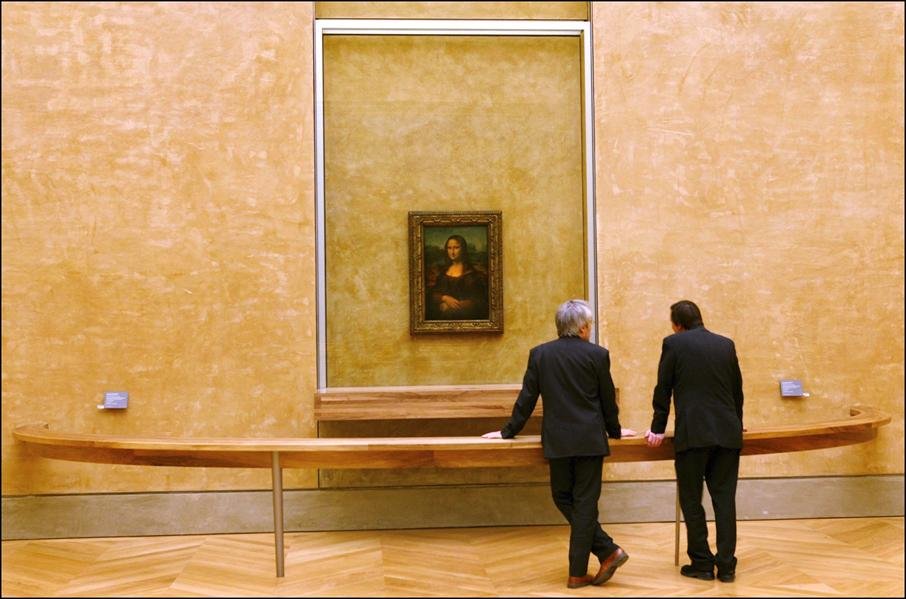
The reason for the fame of the painting
There is no single explanation for the fame of the Mona Lisa; rather, it is the result of several combined factors, such as its display in the Louvre Museum, one of the most visited museums in the world.
The painting contains a number of rectangles, circles, and triangles that align with the golden ratio, making it not just a piece of art to be enjoyed or critiqued aesthetically, but also a highly sophisticated mathematical work.
In mathematics, the golden ratio is achieved when the sum of two numbers divided by the larger one equals the ratio of the larger number to the smaller. This mathematical constant is approximately equal to 1.618.
وتظهر النسبة الذهبية في الهندسة والفن والعمارة وفي الموناليزا نفسها، فإذا رسمنا مستطيلا حول وجه الموناليزا فسنجد أنه يحقق تلك النسبة، وإذا قسمنا هذا المستطيل بخط يمر عبر عينيها إلى نصفين فسنجد أن المستطيلين الناتجين يحققان النسبة الذهبية مرة أخرى، أي أن نسبة طول رأسها إلى عينيها ذهبية.
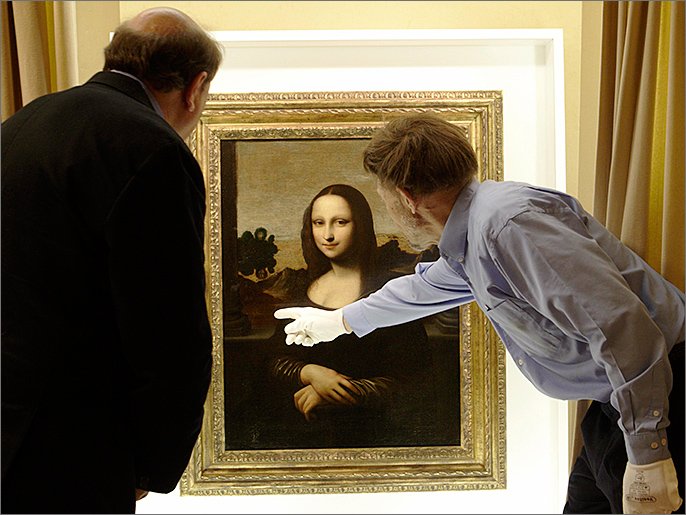
The Theft of the Mona Lisa
The Mona Lisa was stolen on August 22, 1911, in a theft that sparked a media frenzy and brought global attention to the painting.
When news of the theft spread, crowds rushed to the Louvre to see the now-empty space where the painting had hung. The museum’s director of paintings resigned in the aftermath, and newspapers were filled with accusations of fraud. Even the famous painter and sculptor Pablo Picasso was arrested as a suspect during the investigation.
Two years later, the painting was recovered in Italy after an art dealer in Florence reported to the authorities that a man had contacted him about selling the Mona Lisa.
The man was Vincenzo Peruggia, an Italian immigrant in France who had worked at the Louvre installing protective glass on several paintings, including the Mona Lisa.
Peruggia conspired with two accomplices to steal the painting. On the night of August 22, they hid inside the museum overnight and stole the artwork, hiding it in a closet. The next morning, they managed to escape with it.
However, Peruggia failed to sell the painting due to the intense media attention. He was eventually caught, sentenced to prison for the theft, and the painting was returned to the Louvre.
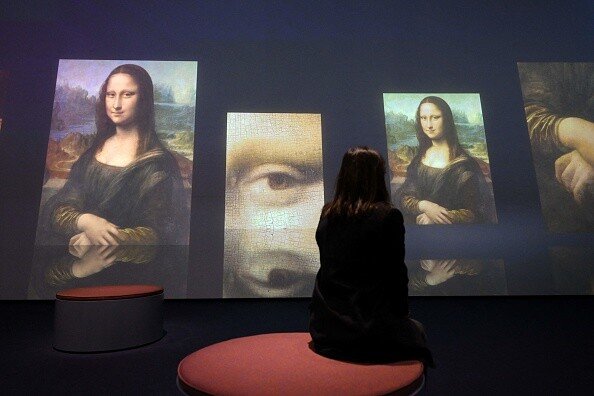
The Journey of the Mona Lisa
Throughout history, French authorities have rarely allowed the Mona Lisa to leave France, but there have been a few exceptions. One such occasion was when First Lady Jacqueline Kennedy requested that the painting visit the United States, and French President Charles de Gaulle agreed.
The tour took place in 1963. The Mona Lisa traveled in a first-class cabin aboard an ocean liner and was exhibited at only two locations: the Metropolitan Museum of Art in New York and the National Gallery of Art in Washington, D.C.
The Mona Lisa remained in the U.S. for six weeks, attracting around 40,000 visitors per day. About ten years later, the painting also drew huge crowds during a major exhibition in Japan.
Preserving the Mona Lisa
During World War II, the Mona Lisa was moved to several locations in the French countryside, as it was identified as one of the most important artworks in the Louvre. It was returned to the museum in 1945 after peace was declared.
The painting shows signs of warping due to pressure from its frame and earlier restoration efforts. Pins were added to the back of the panel to prevent the expansion of a small crack near the upper center of the painting. Later, restorers glued a heavy canvas over the crack to replace the pins.
The protective glass covering the Mona Lisa was replaced with bulletproof glass after several attacks in 1956, when one person threw acid on the painting and another threw a rock.
One of the attacks caused damage near Mona Lisa’s left elbow, but later incidents—including spray paint in 1974 and a coffee cup in 2009—were stopped by the bulletproof glass.





 خشب
خشب فايبرجلاس
 إكسسوارات وديكورات
 أعمال خشبية
 تطريز ونسيج
 خزف وفخار
 فنون ورقية
 بورتريه وفيجوراتيف
 لوحات أكريليك
 لوحات زيتية
 لوحات مائية
 مناظر طبيعية وتجريدية
 ساعات فنية
 فازات وأواني فنية
 مرايات مزخرفة
 وحدات إضاءة يدوية
 وسائد وأقمشة مزخرفة
 أعمال وسائط متعددة
 تركيبات فنية
 جداريات ورسوم حائطية
 فن مفاهيمي
 لوحات كبيرة الحجم